Same day · 5 qt / 4.7 L Dutch oven
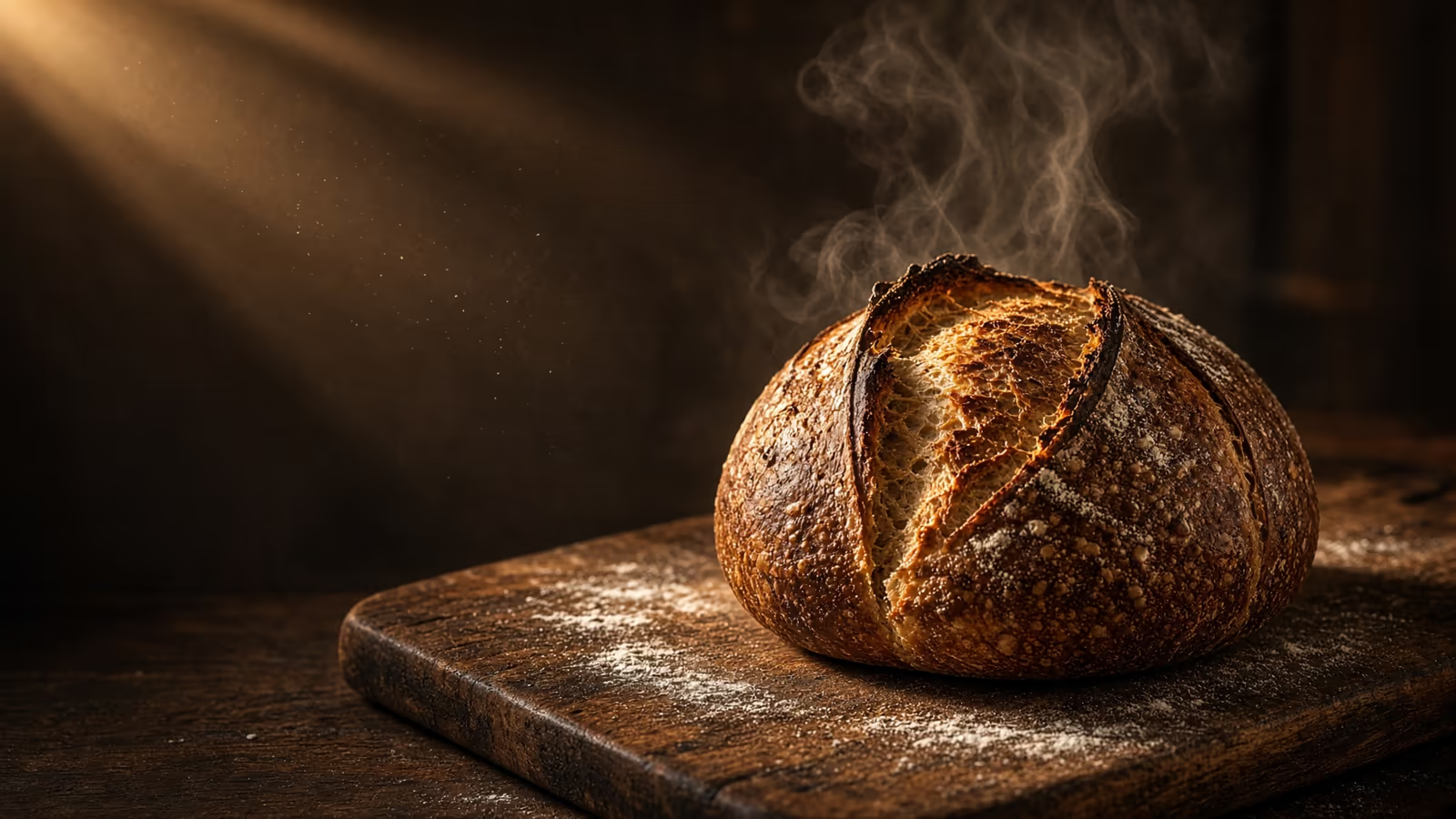
Country loaf, same day
Build the levain at 7 am and it is out of the oven about 7:25 pm, 12h 25m later at 75°F, then it cools for two hours before you slice it. No fridge step, so it is milder. It wants a warm kitchen: at 68°F the same loaf runs into the night.
- Water
- 72%
- Start to finish
- 14h 25m
- Levain
- 25%
- Oven
- 480°F

The schedule
Times are for dough at 75°F (24°C). Start to finish: 18h 2m at 68°F, 14h 25m at 75°F, 12h 36m at 80°F. Filled steps get longer or shorter with temperature. The rest stay the same.
-
1
0:00 · 4h 30m
Build the levain
Mix the levain weights from the formula card. Ready when it has roughly doubled, domed and is just starting to flatten, and smells sweet-sour rather than sharp. Starter straight from the fridge works, but can take an hour or two longer. Keep it warm — on top of the fridge, or in the oven with only the light on, with a note on the door so nobody preheats it.
-
2
4:30 · 45m
Autolyse
Flour and all the water except 20 g, covered. Keep the 20 g for the salt.
-
3
5:15 · 20m
Add the levain
Pinch through until smooth.
-
4
5:35 · 20m
Add the salt
Salt and the 20 g of water you kept back, squeezed through.
-
5
5:55 · 30m
Bulk ferment
Cover it and keep it warm. A warm kitchen is what makes this a same-day loaf. First fold in 30 min.
-
6:25 · 30m
Fold 1 of 4
-
6:55 · 30m
Fold 2 of 4
-
7:25 · 30m
Fold 3 of 4
-
7:55 · 30m
Fold 4 of 4
-
6
8:25 · 1h 15m
Bulk, hands off
No more folding. Bulk is done when the dough has risen roughly 50%, domed, and feels airy — jiggly, not soupy. Read the dough, not this clock.
-
7
9:40 · 5m
Pre-shape
Loose round on a bare counter.
-
8
9:45 · 20m
Bench rest
Uncovered, 20 minutes.
-
9
10:05 · 10m
Shape and basket
Tight shape, seam up in the banneton.
-
10
10:15 · 30m
Final proof
At room temperature, covered. The oven goes on partway through, and the loaf keeps proofing while it heats.
-
11
10:45 · 1h
Oven on
480°F / 250°C, Dutch oven preheated inside. Give the pot at least 45 minutes at temperature. Glass lid or plastic knob? Check its heat rating first. If it is lower than this, fit a metal knob, or bake on a stone with a pan of steam instead. The loaf keeps proofing while the oven heats. Poke test it at the end: a floured fingertip should leave a dent that springs back slowly and not completely.
-
12
11:45 · 20m
Bake covered
Turn the dough out onto parchment, score it in one confident stroke about 1 cm deep, lower it in, lid on.
-
13
12:05 · 20m
Lid off
Drop the oven to 450°F / 230°C. Bake until the crust is deep brown — darker than feels comfortable. A thermometer in the centre should read at least 190°F / 88°C.
Sources King Arthur Baking: Using a thermometer with yeast bread
-
14
12:25 · 2h
Cool before cutting
On a rack, at least two hours. The crumb is still setting; cutting early is what makes a loaf gummy.
Sources King Arthur Baking: How to tell if bread is done baking
No Dutch oven? The app changes the bake to fit what you have. In a loaf tin, the dough proofs in the greased tin and bakes at 425°F with no pot to heat. From a banneton, the loaf goes onto a hot stone or steel with a pan of boiling water below it for the first 20 minutes. Making two? It divides the dough and times each bake.
Sources King Arthur Baking: Easy everyday sourdough breadKing Arthur Baking: A guide to baking bread with steam at home