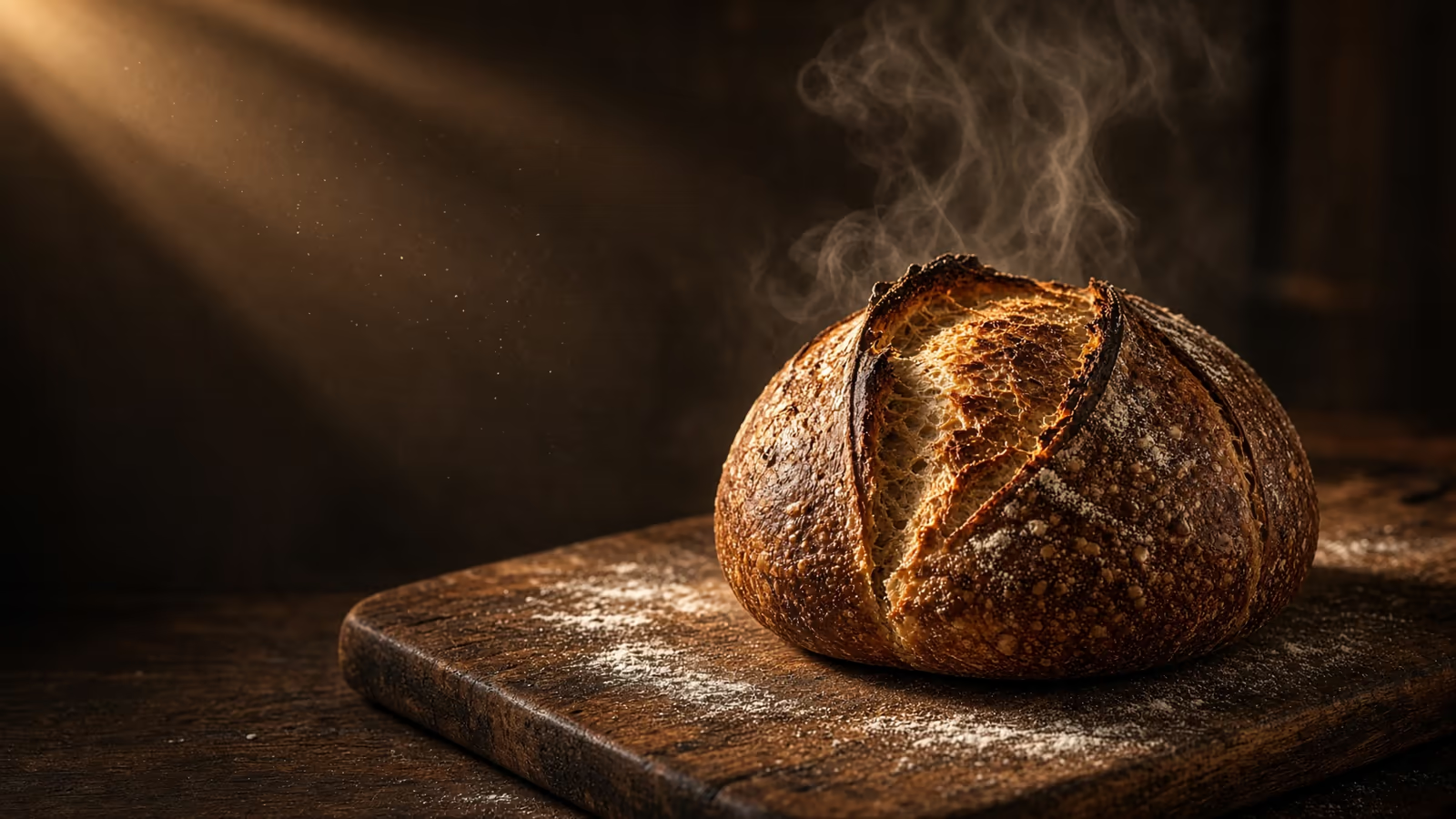
The schedule
Times are for dough at 75°F (24°C). Start to finish: 33h 25m at 68°F, 29h 47m at 75°F, 27h 58m at 80°F. Filled steps get longer or shorter with temperature. The rest stay the same.
-
1
0:00 · 4h 30m
Build the levain
Use the levain at its peak, not after. Past peak at this hydration and the dough will go slack on you.
-
2
4:30 · 1h 30m
Autolyse
Flour and 90% of the water. Hold the rest back for the salt.
-
3
6:00 · 30m
Add the levain
Pinch it through, then leave it to rest.
-
4
6:30 · 30m
Add the salt
Salt with the reserved water. Slap and fold on the counter for two or three minutes.
-
5
7:00 · 30m
Bulk ferment
Use coil folds for these: lift the dough from the middle and let the ends tuck under. It should go from soupy to holding a dome. First fold in 30 min.
-
7:30 · 30m
Fold 1 of 5
-
8:00 · 30m
Fold 2 of 5
-
8:30 · 30m
Fold 3 of 5
-
9:00 · 30m
Fold 4 of 5
-
9:30 · 30m
Fold 5 of 5
-
6
10:00 · 1h 15m
Bulk, hands off
No more folding. Bulk is done when the dough has risen roughly 50%, domed, and feels airy — jiggly, not soupy. Read the dough, not this clock.
-
7
11:15 · 5m
Pre-shape
Very light round. Do not degas it.
-
8
11:20 · 30m
Bench rest
Thirty minutes, uncovered.
-
9
11:50 · 10m
Shape and basket
Letter fold, then roll up. Handle it as little as you can get away with.
-
10
12:00 · 14h
Cold proof
12–16 hours at 40°F / 4°C. Bake it straight from the fridge, or after 45 minutes out.
-
11
26:00 · 1h
Oven on
480°F / 250°C, Dutch oven preheated inside. Give the pot at least 45 minutes at temperature. Glass lid or plastic knob? Check its heat rating first. If it is lower than this, fit a metal knob, or bake on a stone with a pan of steam instead. The loaf can wait in the fridge until the pot is hot. Enamelled or ceramic pot? Check its maker's care notes on heating it empty, and take the loaf out when the oven reaches temperature: a fridge-cold loaf can crack a hot pot.
Sources King Arthur Baking: Artisan sourdough bread tips, part 3Lodge Cast Iron: Cleaning and care: enameled cast iron
-
12
27:00 · 22m
Bake covered
Turn the dough out onto parchment, score it in one confident stroke about 1 cm deep, lower it in, lid on.
-
13
27:22 · 25m
Lid off
Drop the oven to 450°F / 230°C. Bake until the crust is deep brown — darker than feels comfortable. A thermometer in the centre should read at least 190°F / 88°C.
Sources King Arthur Baking: Using a thermometer with yeast bread
-
14
27:47 · 2h
Cool before cutting
On a rack, at least two hours. The crumb is still setting; cutting early is what makes a loaf gummy.
Sources King Arthur Baking: How to tell if bread is done baking
No Dutch oven? The app changes the bake to fit what you have. In a loaf tin, the dough proofs in the greased tin and bakes at 425°F with no pot to heat. From a banneton, the loaf goes onto a hot stone or steel with a pan of boiling water below it for the first 20 minutes. Making two? It divides the dough and times each bake.
Sources King Arthur Baking: Easy everyday sourdough breadKing Arthur Baking: A guide to baking bread with steam at home